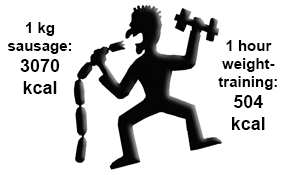
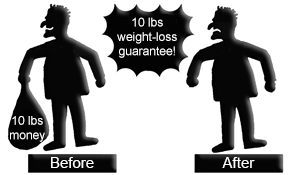
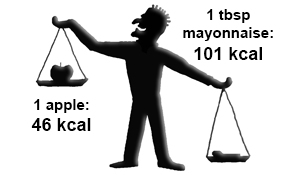
We would like to draw your attention to a simple fact. Whatever sport you do, whatever you eat, you will lose weight only if you burn more calories than you eat. This is the basic principle of weight loss, so don't believe in 'miraculous' weight loss ads.
2. The effect of writing down what you eat
"Those who kept daily food records lost twice as much weight as those who kept no records. It seems that the simple act of writing down what you eat encourages people to consume fewer calories."
Counting calories and using our website is free. So you don't have to worry whether or not we are trying to sell you something that does not work..
4. It's simple
Calorie counting can be learned quickly. For the first time it can seem difficult, but doing it day after day makes it become simple.
The routine helps a lot and it's easy because of lot of repetitions.
Our main goal is to make the food-tracking process as quick and simple as possible.
5. Motiváció
You can't achieve long-term weight loss in a few weeks. It's difficult to stick to your diet, and your initial enthusiasm will fall.
The best motivation in order to maintain your diet, is to see your progress each day, and yourself getting closer and closer to your goal. You can see your progress on diagrams and other tools with this website.
6. You can combine it with other methods.
Are you on a different diet, or are taking weight loss pills? No problem. You can count your calories whilst using these methods, and keep track of their effect.
7. It's not what you eat, it's how much.
During a 10 week experiment, Mark Haub, a professor of human nutrition, ate only biscuits, cakes and other high-sugar, fat-laden junk food. He lost 27 pounds just through cutting down the amount of food he ate.
8. Teaching effect
You can get used to calorie counting quickly. You will know by heart which meals are good for you and still have low calories, and those foods that seem to be harmless but in fact can still ruin your diet. Counting calories highlights your dietary mistakes, and shows you how to fix them.
9. Global success
Calorie counting is getting more and more popular in the world. We found out none of the existing softwares are really user friendly and flexible so we created our own.
10. Community
One of greatest things that can help you in reaching your goal can be being in an active community all with the same goals and purposes. Ask questions and share your problems or experiences on our forum or Facebook site.
No result You can add own sport by clicking "<" button.
100 g
120
kcal
100 g
120
kcal
100 g
120
kcal
100 g
120
kcal
100 g
120
kcal
100 g
120
kcal
100 g
120
kcal
100 g
120
kcal
2000
kcal
Dalily Routine Kcal Burning
TOTAL KCAL BURNING:
1200
kcal
Evaluate this day
Calorie
Simulator
Written Evaluation
If you do not eat/do sport any more today click on evaluation!
Calorie Simulator is a Premium feature.
Your total calorie balance (from your first day to now) considering you added every food you ate: calorie burning (your plan was kcal). Accordingly you should've lose kg (your plan was kg). Your actual weight-loss is 25 kg.
The secret of a successful diet is quite simple: burn more calories than you eat. Of course you will need a lot of self-discipline, but you will be surprised how flexible calorie counting is compared to other types of diets. There are no forbidden foods and you can raise your calorie intake limit simply by doing exercises.
Last but not least, counting calories is supported and recommended by most specialists.
Conscious Eating (6 steps)
Find out why you eat more than you need to!
Eat less in a way that is perfectly enough, and feel totally satisfied. It's
possible. You only need to understand what is in your mind when you are eating.
1. Understanding your habits
You only need to understand what kind of thoughts are in your head when you are
eating. Your relationship with eating will change only if you know this, and
with practice.
Imagine a moment where there is a big plate full of your favourite food in
front of you. Let’s say XXXL size. Done? What do you feel now? You want to eat
it, right? And eat it fast. You want to get this fantastic meal inside your
body. It is a very old programming, coming from a very old human habit: „Eat
when you can! Who knows what happens next! What is inside is yours! No one can
take it away.” Have you ever experienced starving a lot for a specific food,
and then when you eat it, you don't even remember a single moment of consuming
it? There is the food. And the next moment, it's the empty plate. What
happened? Familiar? It's not a coincidence: it's one of the most difficult
things to be present in these moments.
2. Ok, but what can we do?
Only listen. Listen to the voice in your head that urges you to eat a lot
quickly! Only recognizing these thoughts can free you from the need to eat
much. But you need to be very aware. You cannot make it like learning a mantra
and use it every time. Because every time you have different thoughts. And the
more thoughts you catch, the more free you are to decide what to do. Without
knowing what is in your head, you are completely defenseless to your habits.
It's difficult, because you learned not to be present when you eat. It's easy
to be present when you are meditating in a silent room. Being present in the
moment of eating is one of the biggest challenges! But don't think about this
before your meal. Don't think about it after your meal. Be present when you are
eating and watch your thoughts in the moment when you are sitting at the dining
table. In this state, you will already feel much better and much more free. You’ll
already start to feel like you are not controlled by your habits, and it's
fantastic. What should you do now? How should you eat? Watch your plate, watch
the food, and start eating slowly. Look at your hands when you are touching the
fork, sticking it to the food and look at it before you eat it. You don't need
to be extra slow. You will feel it is the normal tempo! It'sdifferent,
but good. You don't feel any urge to eat it fast. If you do it right you will
realize now you aren’t thinking about other things (your problems, your work, and
what to do next). You were always thinking about something else while eating.
Now you give all your attention to eating. It's a fresh experience without any
need.
3. The actual eating process
And now comes the most difficult part. It comes when you taste the food. You
will feel an urge to take another bite quickly, but if you recognize this urge,
it is gone in the moment. Stay present. Listen to the taste. Let me show you an
example. I'm sure you have been to a standing reception, right? Where everyone
tries to show their perfect selves. And you notice your favourite snack is on
the table. You want to eat it all. It's such a shame you have this feeling, you
start feeling awkward inside. But only getting one piece of that snack is okay.
So you go there and get one, and eat it. How great! Wow! It's fantastic. You
know why it was so fantastic? It's the same food you buy for yourself
sometimes. But now it's much better! Maybe you'd think that it is because it's
free. Nooo. Don't think that you are so cheap. :) The difference is because you
had only one bite and you were present in the moment when you tasted it. And
you were present because you really WANTED to TASTE IT! Is that as good as it
looks? Is that salty enough? You don't think about anything else in this
situation, and this makes that one bite much more valuable than eating a whole
pack of the same food at home. Even if it's too salty, it is not a big issue.
You feel good not because of the food itself, but because you became aware and
listened to the exact moment when you consumed that food. And you became one
with that moment. Which always makes you feel good and free. Unfortunately, a
moment later, you already start to think again about eating more. But it's alright
too. Our job is not to judge any of our behaviours in our head, but to see
them. So let's get back to the moment where you are at the dining table, and
you taste your food. You should consume that bite the same way as you do it in
a standing reception. And you have to do it for every bite. The experience of
eating will be totally different. You will realize you don't feel an urge to
eat big pieces. Eating little pieces are just as satisfying. And you will
realize you are chewing it for a lot longer. There is no urge. You don't just
bite and swallow, you chew it for seconds and listening to the beautiful
variety of every aspects of the taste. I tell you this may seem very easy, but
I think it's one of the most difficult things to do from the start until the
end. But the more aware you are of your eating, the more satisfied you will be
when you are finished. Much less portions will be enough. It's not because you
tricked your stomach by extending the duration of feeling full because of this
effect. It is because you KNOW that you are eating, and you are aware of that.
It will be more satisfying to eat a smaller portion this way, than eating a big
portion quickly. When you eat a big portion quickly, sometimes you can realize
that you are still hungry. I mean, in your head! You want to eat more, but you
feel your stomach doesn't let you eat more. You have eaten a big portion and
you are still not satisfied some way. You need to be present to realize that
how unsatisfying your old eating habit is. Eating consciously will make your
body satisfied, and you won't feel that
you need anything more. When you unconsciously eat a big portion you will feel
bad afterwards. You say it was because you stuffed your stomach. It's only the
physical manisfestation in the body which tells you "My friend, you missed
the point. You better do it differently next time". But we don't hear it,
we just think we feel bad because we ate so much. Sometimes, we even lie to
ourself saying that "OOOh, that was sooo good", and we hold our stomach
to prevent it from blowing out. But you can't lie to your body, it will always
send you signs.
4. How to practice it?
You will feel a great urge sometimes to unconsciously eat the old way: "I
wanna eat again without listening to the moment! I just wanna eat that whole
pizza, I don't care!". If that’s the case, don't feel bad. Eat the whole
pizza. But when you let yourself do this, you will know what you are doing, and
this experience will help you in the future. The temptation will be less from
time to time. Never judge yourself when you eat a whole pizza without even
realizing it. Always know that when you realize that you didn't realize what
you were doing, it means that you are REALIZING what you doing, and it's
enough. It's perfectly okay. You don't need to be a pro in a day. What's
more: you don't need to be a pro at all. This thing is working for itself, you
don't really have to do anything. The more time you realize what you are
doing/or what you were not doing, it only means you are more conscious of your
eating. So you can't make a mistake. One could say the only mistake you can do
is not realizing anything, but what is not realized is like something what never
happened. So there is nothing to worry about :).
5. Portions
Okay, but how do you decide how much to eat? You don't wanna eat too little, or
too much. If you were a "pro" you wouldn't need any help in this. And
you could stop eating in the moment when it's enough. But I don't know if
anyone is on this level :)). Here comes calorie counting into the picture. As
calories are the fuel of the body, they represent the amount of food your body
needs. Fortunately, we have this tool to calculate the exact amount which our
body needs. When setting your diet plan, I want to encourage you not to set low
calorie limits. Test it for some days. In our old habits, we could easily eat
2500-35000 calories a day. The best option is to just track your calorie intake
without any restriction for the first days. It will give you a picture of how
much you usually eat. Let's say it is 3000 kcal per day. It's not
extraordinary. If you set a 1200 calorie limit now, you will give up your diet
in a few weeks. You need to find the limit where you are not hungry, or where
you can tolerate the hunger very easily. If you are hungry, your diet plan is
wrong. You will give it up, or what's worse, you’ll expose yourself to
suffering for a long time. The calorie limit should be set on a level which you
can maintain for months! The key is that the diet should be easy! The whole
calorie counting method should only serve the goal to help you find the right
limit for what your body needs. The goal of your body is to also be healthy.
It's not only your goal. Your body wants to eat the right amount. Not more, not
less. And the right amount is in match with your perfect weight.
6. Our site
I've created this website to help you in this process. I want to give you a
guide to how many calories you should eat, and to help you to keep this level. We are so used to bad eating habits, so we need this tool to realize our own
needs. By clicking here you can calculate your calorie needs. I hope this website will guide you through this process the easiest and
most comfortable way. If you learned the "lesson", you won't need it
anymore. Never feel bad if you "cheat" your limit. The goal is not to
"not-cheat", but to find your perfect needs. Overeatings also
helps you to experience the working of your body. Never feel ashamed. Just
acknowledge it, and track it without guilt. :)
I hope you found this article useful. If you did, please share it. I'm
personally very interested in your responses, so don't hesitate to write me on
Facebook, or here in the forum.
Our gift to new users
Our site has been working in Hungary for 6 years, and we launched the English
version in January 2019. Now we’re giving a gift for the first 1000 users,
which contains extra features: a 2 months Premium Membership (which works only
for the English version). Please note that our site is free to use forever
without any limitation, and the Premium Membership contains only some extra
features to cover our maintenance costs.
Fórum / Grillezett csirkemell: karat232323 (1 órája):I started volunteering at the shelter because I needed somewhere to go after my own dog died, a lab mix named Charlie who’d been with me for fourteen years, who’d slept at the foot of my bed, who’d walked with me every morning, who’d been the only thing that made the apartment feel like a home after my wife left. The shelter was on the edge of town, a place that was always full, always underfunded, always trying to do more with less. I’d seen it from the outside a hundred times, the chain-link fence, the concrete runs, the sound of barking that never stopped, the sound of animals waiting for someone to come and take them home. I’d walked past it when I was walking Charlie, the way you walk past something you don’t want to see, the way you look away because looking means seeing, and seeing means knowing, and knowing means you have to do something. After Charlie was gone, I didn’t have anywhere else to walk. I didn’t have anywhere to go in the mornings, the mornings that had been ours, the mornings that were empty now, the mornings that were just me and the silence and the space where his leash had been. I started walking to the shelter because it was the only place that made sense, the only place where there were dogs who needed someone to walk them, the only place where the mornings could be something other than a reminder of what I’d lost. I showed up on a Tuesday, the same Tuesday that had been our walking day, the day when Charlie and I had gone to the park, the day when he’d run through the grass, the day when he’d been the thing that made everything else okay. I walked through the gate, the chain-link fence, the concrete runs, the sound of barking that never stopped, and I said “I’m here to walk the dogs.” The woman at the desk, a woman who’d been there for years, who’d seen a thousand people come and go, who’d watched the dogs come in and the dogs go out, who’d held them when they were scared and watched them when they left, she looked at me and said “you’re here to walk the dogs.” And I said “I’m here to walk the dogs.” And she handed me a leash, a leash that wasn’t Charlie’s, a leash that belonged to a dog I didn’t know, a dog who was waiting in one of the concrete runs, a dog who needed someone to walk him, a dog who was the reason I was there.
The dog’s name was Bear, a black lab mix who’d been at the shelter for six months, who’d come in as a stray, who’d been adopted twice and returned twice, who’d been there so long that the volunteers had started to think he’d never leave. He was the kind of dog who pulled on the leash, who barked at other dogs, who didn’t know how to sit or stay or any of the things that people wanted their dogs to know. He was the kind of dog that people looked at and walked past, the kind of dog that was too big, too strong, too much work, the kind of dog that ended up in the shelter and stayed there. I took him out of his run, his tail wagging, his body wiggling, his mouth open in the kind of smile that dogs have when they’re about to go somewhere. He pulled me down the hallway, through the gate, into the yard, the yard where the dogs got to run, the yard where they got to be something other than the dogs in the concrete runs, the yard where they got to remember what it felt like to be free. I let go of the leash and he ran, the way Charlie had run, the way dogs run when they’re not thinking about anything except the grass under their feet and the wind in their face and the moment they’re in. I stood in the yard, watching him run, watching him be the dog he was supposed to be, the dog who wasn’t too big or too strong or too much work, the dog who was just a dog, running in the grass, the way dogs are supposed to run. He came back to me after a while, his tongue hanging out, his body leaning against my legs, his head under my hand, the way Charlie had leaned, the way Charlie had put his head under my hand when he wanted me to know that he was there. I sat on the ground, the way I’d sat with Charlie, and I put my arms around him, the way I’d put my arms around Charlie, and I said “you’re going to be okay.” I didn’t know if he was. I didn’t know if any of them were. But I said it anyway, the way you say things when you need to believe them, the way you say things when the only thing you have is the hope that they’re true.
I came back the next day, and the day after that, and the day after that. I walked Bear every morning, the way I’d walked Charlie, the way I’d walked the mornings that were empty, the way I’d walked the mornings that were now full of a dog who needed me to walk him. I taught him to sit, to stay, to walk on the leash without pulling, to be the dog that someone would want to take home. I spent hours with him, in the yard, in the hallway, in the runs, teaching him the things that Charlie had known, the things that would make him adoptable, the things that would get him out of the shelter, the things that would find him a home. The volunteers watched me, the ones who’d been there for years, the ones who’d seen a thousand dogs come and go, the ones who’d given up on Bear, the ones who’d thought he’d never leave. They watched me teach him to sit, to stay, to walk on the leash without pulling, and they said “you’re good with him.” And I said “he’s good with me.” And they said “you should take him home.” And I said “I can’t.” I couldn’t. I couldn’t take him home because he wasn’t Charlie, because taking him home would mean letting go of the dog I’d lost, because the apartment was still full of the things that had been his, the bed at the foot of mine, the leash by the door, the bowl in the corner, the things that I hadn’t been able to put away, the things that were still there, the things that were waiting for him to come back. I couldn’t take Bear home because Bear wasn’t Charlie, and Charlie was the only dog I’d ever wanted.
I kept coming, kept walking him, kept teaching him, kept watching him become the dog that someone would want. The months passed, the way months pass when you’re waiting for something, when you’re not sure what you’re waiting for, when you’re just going through the motions, the way I’d been going through the motions since Charlie died, the way I’d been going through the motions since my wife left, the way I’d been going through the motions since I’d started walking to the shelter because it was the only place that made sense. Bear learned to sit, to stay, to walk on the leash without pulling. He learned to be calm when other dogs walked by, to wait when I told him to wait, to come when I called him, to be the dog that people wanted their dogs to be. He was adopted again, a family with kids, a yard, a house that was big enough for a dog who’d been in the shelter for almost a year. I watched them take him, the kids holding the leash, the parents smiling, the dog who’d been there so long finally going home. I watched them walk out the gate, the chain-link fence, the concrete runs, the sound of barking that never stopped, and I felt something I hadn’t felt since Charlie died, something that wasn’t grief, something that wasn’t loss, something that was the thing that happens when you let go of something and it becomes something else. He was gone. He was home. He was the dog who’d been in the shelter for almost a year, who’d been too big, too strong, too much work, who’d been the dog that people looked at and walked past, who’d been the dog that I’d walked every morning, who’d been the dog that taught me that the mornings could be something other than empty.
I kept coming after Bear was gone. I walked the other dogs, the ones who’d been there too long, the ones who’d been adopted and returned, the ones who were too old, too sick, too scared, the ones that people didn’t want. I walked them the way I’d walked Bear, the way I’d walked Charlie, the way you walk a dog when you’re walking for both of you, when the walking is the thing that keeps you going, when the walking is the thing that makes the mornings something other than the space where something used to be. I taught them to sit, to stay, to walk on the leash without pulling, to be the dogs that someone would want. I watched them go, the way I’d watched Bear go, the way you watch something go when you’ve been holding it for a long time, when the holding has become the thing that keeps you going, when the letting go is the thing that you do because it’s the thing that’s supposed to happen. I was there for three years, walking the dogs, teaching them, watching them go. I was there for the ones who left and the ones who stayed, the ones who found homes and the ones who didn’t, the ones who were there so long that the volunteers started to think they’d never leave. I was there because I didn’t have anywhere else to be, because the mornings were still empty, because the apartment was still full of the things that had been Charlie’s, because I hadn’t been able to put them away, because putting them away meant letting go, and letting go was the thing I didn’t know how to do.
The shelter closed in the fall. The city had cut the funding, the way cities cut funding for things that don’t make money, the way cities cut funding for things that are too expensive, the way cities cut funding for things that are full of dogs that no one wants. The notice came on a Friday, the same Friday that had been the day Charlie died, the same Friday that had been the day my wife left, the same Friday that had been the day I started walking to the shelter because it was the only place that made sense. The dogs had to go. They had to go to other shelters, to other cities, to other places where there were people who might want them, to other places where they might find homes, to other places where they might be the dogs that someone was looking for. The volunteers gathered on the last day, the ones who’d been there for years, the ones who’d seen a thousand dogs come and go, the ones who’d held them when they were scared and watched them when they left. They walked the dogs for the last time, the ones who’d been there too long, the ones who’d been adopted and returned, the ones who were too old, too sick, too scared, the ones that people didn’t want. They put them in the vans that would take them away, the vans that would take them to other shelters, to other cities, to other places where they might find homes. I watched them go, the dogs I’d walked, the dogs I’d taught, the dogs I’d held, the dogs I’d let go. I watched them go the way I’d watched Bear go, the way I’d watched Charlie go, the way you watch something go when you’ve been holding it for a long time, when the holding has been the thing that keeps you going, when the letting go is the thing that you do because it’s the thing that’s supposed to happen.
I was the last one there, the way I’d been the first one there, the way I’d been there every morning for three years, the way I’d been there when the dogs came and the dogs went, the way I’d been there when the shelter was full and the shelter was empty. I walked through the runs, the concrete runs that were empty now, the runs that had been full of dogs who needed someone to walk them, the runs that were silent now, the runs that had been the only place that made sense, the runs that were the place where I’d learned that letting go was the thing you did because it was the thing that was supposed to happen. I stood in the yard, the yard where the dogs had run, the yard where Bear had run, the yard where Charlie had run, the yard where the dogs had been free, the yard that was empty now, the yard that was the place where I’d learned that the mornings could be something other than empty, the yard that was the place where I’d learned that the walking was the thing that kept you going, the yard that was the place where I’d learned that letting go was the thing you did because it was the thing that was supposed to happen.
I opened my phone because I didn’t know what else to do. I’d been doing that a lot lately, opening my phone, scrolling through things that didn’t matter, looking for something that would tell me what to do next. I ended up on a site I’d heard about from one of the other volunteers, someone who’d mentioned it in passing, the way people mention things they don’t expect you to remember. I’d never visited it before, had never thought about it, had never been the kind of person who did the kind of things that happened on sites like that. But that night, standing in the yard that was empty, the yard where the dogs had run, the yard that was the place where I’d learned that the mornings could be something other than empty, I found myself going through the motions. I found a https://umaxcorp.com Vavada alternative link, because the regular site was blocked or something, I didn’t really understand how it worked, but this one opened and I did whatever I needed to do to get in, and I deposited a small amount, the kind of money I’d spend on a leash I didn’t need, and I started playing.
The game I picked was one with a dog theme, which felt like something I couldn’t look away from. There were dogs running in a yard, the way Bear had run, the way Charlie had run, the way the dogs had run when they were free, the way they’d run when they didn’t know that the running was the thing that was supposed to be the whole world. I spun the reels, watching the dogs run, the yard fill, the leashes appear and disappear, the way the leashes had appeared and disappeared when the dogs came and the dogs went, when the dogs were taken home and the dogs were brought back, when the dogs were the thing that kept you going, when the dogs were the thing that taught you that letting go was the thing you did because it was the thing that was supposed to happen. I wasn’t thinking about winning. I was thinking about the dogs, the ones I’d walked, the ones I’d taught, the ones I’d held, the ones I’d let go. I was thinking about Bear, who’d been adopted by a family with kids, who’d found a home, who’d been the dog that people wanted, who’d been the dog that I’d walked every morning, who’d been the dog that taught me that the mornings could be something other than empty. I was thinking about Charlie, who’d been the dog I’d lost, who’d been the dog I’d been holding onto, who’d been the dog I hadn’t been able to let go, who’d been the dog that was the reason I’d started walking to the shelter, who’d been the dog that was the reason I’d been there for three years, who’d been the dog that was the reason I was standing in the empty yard, the yard that was the place where I’d learned that letting go was the thing you did because it was the thing that was supposed to happen.
And then the screen changed. The music shifted, the colors deepened, and suddenly I was looking at a bonus feature I’d never seen before. The game told me I’d triggered something called the “rescue feature,” a progressive prize that built over multiple spins, and I had the chance to reveal multipliers by selecting different dogs in a yard that looked like the yard where I’d walked the dogs, the yard where Bear had run, the yard where Charlie had run, the yard that was empty now, the yard that was the place where I’d learned that the mornings could be something other than empty. I had ten picks. Ten chances. I started tapping, the way I’d started walking, not knowing what would come, just knowing I had to keep going. The first three picks were small. The fourth revealed a symbol that doubled everything I’d accumulated. The fifth was another doubling. The sixth revealed a symbol that added five extra picks, and suddenly the yard expanded, more dogs, more chances. The seventh pick was a large multiplier. The eighth was another doubling. The ninth revealed a symbol that triggered a final multiplier based on the total number of spins I’d played. By the time I got to the fifteenth pick, I was crying. Not because of the number, not because of the win, but because I was looking at the dogs on the screen and they were the dogs I’d walked, the ones I’d taught, the ones I’d held, the ones I’d let go, and they were running, the way they’d run when they were free, the way they’d run when the yard was full, the way they’d run when they didn’t know that the running was the thing that was supposed to be the whole world.
The game calculated the total, and I watched the number appear. It was enough. Enough to start a new shelter, a shelter that wouldn’t close, a shelter that would be there for the dogs who needed it, a shelter that would be the place where the dogs could run, a shelter that would be the place where the mornings could be something other than empty. I cashed out immediately. I withdrew everything, watching the confirmation screen appear with a clarity that felt like the first time I’d walked Bear, the way he’d run, the way he’d leaned against my legs, the way he’d put his head under my hand, the way he’d been the dog who taught me that the mornings could be something other than empty.
I found the building in a month, a warehouse on the edge of town, a place that had been empty for years, a place that had a yard in the back, a yard that was big enough for dogs to run, a yard that could be the place where they were free. I fixed the fence, painted the walls, built the runs, the concrete runs that would hold the dogs who needed a place to stay, the dogs who were waiting for someone to come and take them home. I opened the doors on a Saturday, the kind of Saturday that smells like spring, the kind of Saturday that feels like something is starting. The dogs came, the ones from the old shelter, the ones who’d been taken to other cities, the ones who’d been waiting for a place to come back to, the ones who’d been waiting for someone to open the doors. They came in vans, the same vans that had taken them away, the vans that were bringing them back, the vans that were the thing that was supposed to happen, the thing that was supposed to happen when you let go of something and it comes back. I walked them into the yard, the yard that was new, the yard that was theirs, the yard where they could run, the way they’d run when the old yard was full, the way they’d run when they didn’t know that the running was the thing that was supposed to be the whole world. I let them go, the way I’d let them go before, the way I’d let them go when they were adopted, the way I’d let them go when the shelter closed, the way I’d let them go when I’d learned that letting go was the thing you did because it was the thing that was supposed to happen. They ran, the way Bear had run, the way Charlie had run, the way dogs run when they’re free, the way dogs run when they don’t know that the running is the thing that’s supposed to be the whole world. I stood in the yard, the yard that was full now, the yard that was the place where I’d learned that the mornings could be something other than empty, the yard that was the place where I’d learned that letting go was the thing you did because it was the thing that was supposed to happen, and I watched them run.
I still walk the dogs every morning, the way I’ve walked them for three years, the way I’ll walk them for three more, the way I’ll walk them as long as there are dogs who need someone to walk them, as long as there are mornings that could be something other than empty. I walk them in the yard, the yard that was a warehouse, the yard that was empty, the yard that is full now, the yard that is the place where the dogs run, the place where they’re free, the place where they don’t know that the running is the thing that’s supposed to be the whole world. I think about that night sometimes, the one in the empty yard, the one where the dogs were gone, the one where the shelter was closed, the one where I didn’t know what to do next. I think about the night I found a Vavada alternative link and did something I’d never done before, the night I was given back something I didn’t know I was asking for. I don’t think about it as luck. I think about it as the night I learned that letting go wasn’t the end, that the dogs would come back, that the yard would be full again, that the mornings would be something other than empty. I think about it as the night I learned that the dogs I’d let go were the dogs I’d been holding onto, that the dog I’d lost was the dog I’d found, that the shelter wasn’t a place, it was the thing you carried with you, the thing that kept you going, the thing that taught you that letting go was the thing you did because it was the thing that was supposed to happen, because the dogs would come back, because the yard would be full again, because the mornings would be something other than empty. The dogs are still here. They’re in the yard, running, the way they’ve always run, the way they’ll always run, as long as there’s someone to open the gate, to let them out, to let them be the dogs they’re supposed to be. I’m still here, opening the gate, letting them out, watching them run. I’m still here, being the person who learned that letting go was the thing you did because it was the thing that was supposed to happen, because the dogs would come back, because the yard would be full again, because the mornings would be something other than empty. The mornings are something other than empty. They’re full of dogs running, dogs who were in the old shelter, dogs who were in the new shelter, dogs who were in the vans that took them away, dogs who came back, dogs who are running in the yard, the yard that was empty, the yard that is full, the yard that is the place where I learned that letting go was the thing you did because it was the thing that was supposed to happen, because the dogs would come back, because the yard would be full again, because the mornings would be something other than empty.
Kedves Felhasználó! Mint láthatod az oldal tetejéről kiszedtük a nagy reklámot.
Ez, bár a fő bevételi forrásunk volt, nagyon zavaró volt, sokszor kellemetlen képeket
mutatott, lefagyásokat okozott, ráadasul nem is volt elég az oldal működési
fenntartásához! Jelenleg helyette a mobil használathoz jobban alkalmazkodó
megoldásokat tesztelünk.
Úgy gondoljuk számotokra is pozitívabb, ha a régi megoldás helyett, egyszer fut le egy
reklám és ez akkor történik, amikor ti is hozzájárultok: a nap kiértékelése folyamán.
Nézz meg egy reklámot a kiértékeléshez!
Ezzel támogatsz minket is, köszönjük!
1. Look up the matching food in the USDA database,
here.
Existing calorie/protein/carbo/fat data cannot be changed. They are locked. You need to find the best matching food (calorie as proirity) in USDA database. If there are more good results, pick the one with most info.
2. Copy the URL link of the food (https://...) and paste it here. Then click on "Upload"! Thank you!